How to move your requests out of Paw (RapidAPI for Mac)
UpdatedShort answer
You don’t have to leave today. Paw, now called RapidAPI for Mac, still works on the macOS versions it supports, and its own site says upcoming releases, including macOS 27, won’t be tested, certified or officially supported. The safe step now is an export: choose File › Export All Requests with an exporter extension, keep the file, and try opening it in another app while Paw still runs. OpenAPI, Swagger and Postman files can be read by many API clients, Plainwire included.
The free ways
Free: check whether you need to move
- Look at the macOS version you use and the one you plan to update to. The notice on paw.cloud names macOS 27 as one that won’t be supported; Paw may still open there, but nobody is promising it.
- On paw.cloud’s Updates page, the newest version listed when we read it was 4.5.5, from April 20, 2026, for macOS 13 or later.
- If you stay, keep an export anyway.
Free: export everything from Paw
- Install an exporter extension from paw.cloud’s extensions page: OpenAPI 3 Code Generator, Swagger, or Postman.
- In Paw, open the document and choose File › Export All Requests, then pick that exporter. Save the file.
- Export a second copy in another format. They keep different things, and it costs nothing.
- Keep the original .paw document too.
The OpenAPI 3 extension’s page lists it as version 0.1.2-beta, updated August 9, 2022. Check what it wrote before you rely on it.
Free: open it somewhere else
- Import the file in the API client you use next. Most read OpenAPI or a Postman collection; check its own help for which versions.
- Open ten requests you use most and send each one. Compare the URL, query, headers and body with Paw side by side.
- Type passwords and tokens in again. Put them in the new app’s secret store, not in the exported file.
Where the free ways stop
- Environments and Paw’s dynamic values (timestamps, signatures and values from extensions) aren’t in an OpenAPI file.
- Paw’s OpenAPI exporter can label query parameters as headers, so check those.
- An OpenAPI file doesn’t carry your passwords and tokens, so you’ll type them again. Look through any other export before you share it.
- Scripts from Paw extensions don’t come across.
How Plainwire does it

Plainwire is a Mac app we make: a native API client for your Mac that keeps requests in plain files.
- In Plainwire, choose File › Import › OpenAPI or Swagger (and Paw)… and pick the file. Adding it to an open collection is free.
- Requests keep the names you gave them, with methods, URLs, headers, path parameters and bodies. Each different host becomes a variable such as
{{baseUrl}}. - Basic, bearer and API key sign-ins become placeholders. Put the values in Collection Settings › Secrets, where they stay in your Keychain and out of the files.
- Then look in each request’s Headers tab for query names such as page or limit, and move them to Params.
- One request at a time works too: copy it from Paw as cURL and choose Request › Paste cURL as New Request. Help › Moving from Paw has all of this.
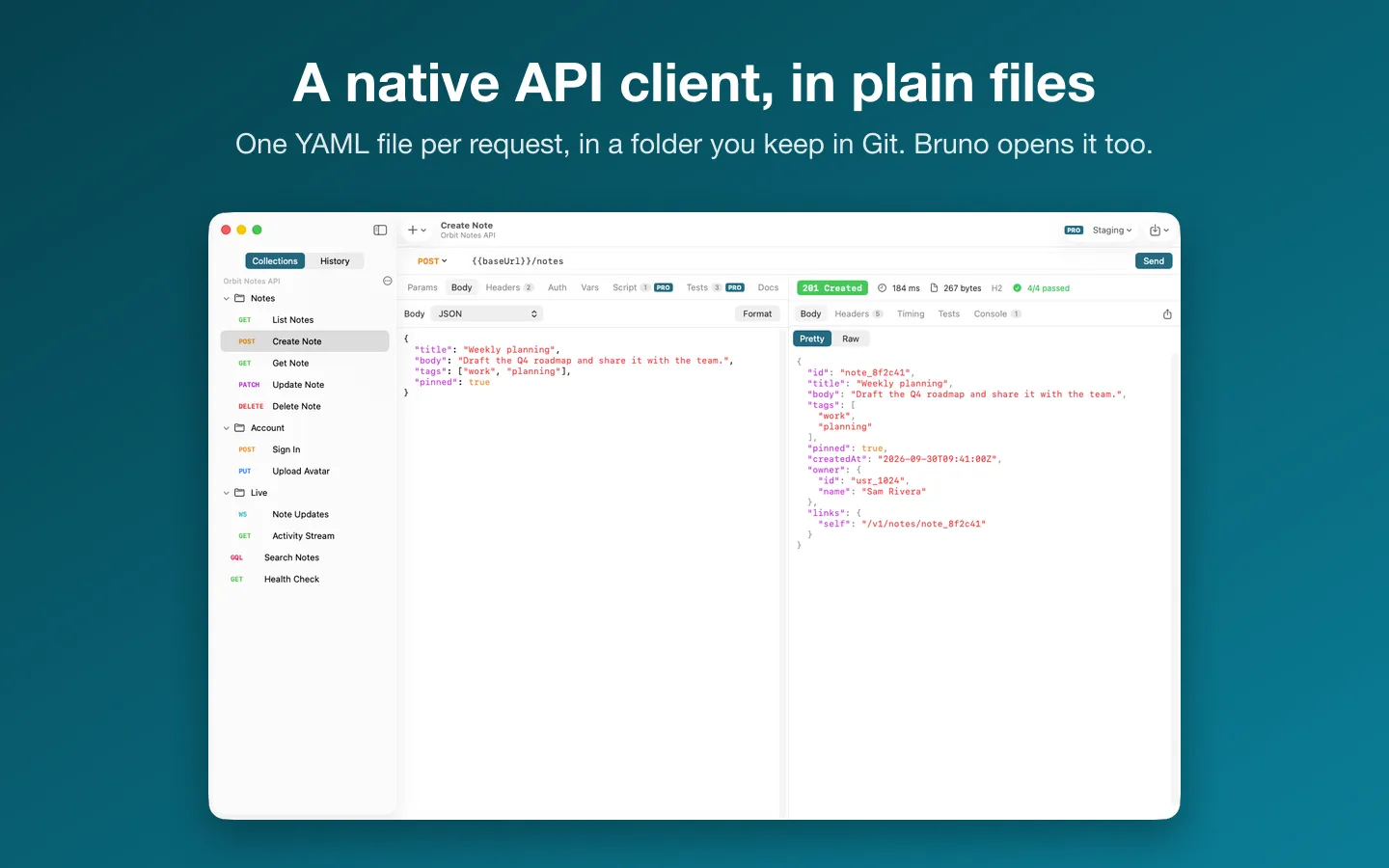
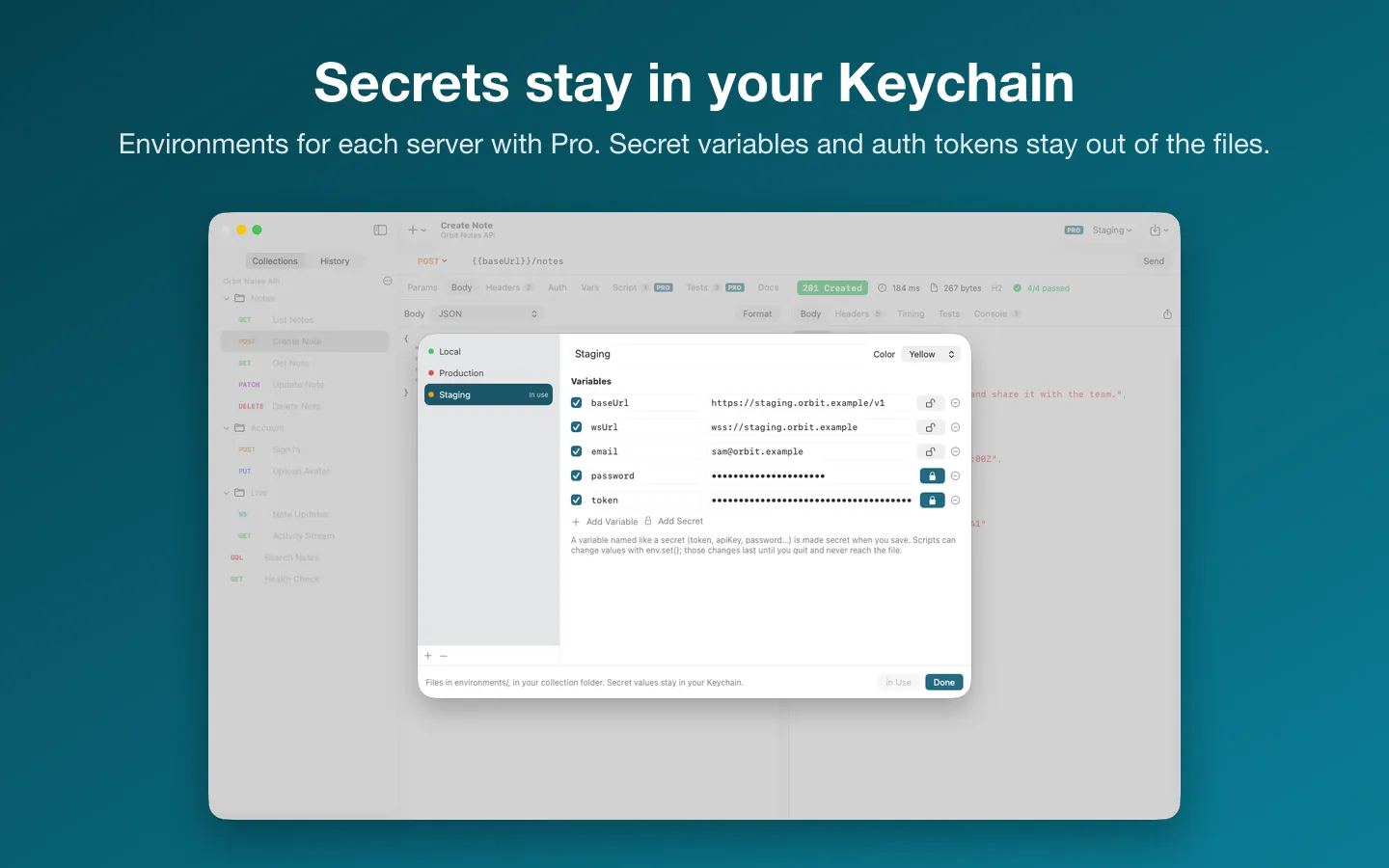
Free to use without a key: unlimited requests, history, one collection folder, environments with their plain (non-secret) values, every import and cURL export.
$9.99 one-time for Pro, no subscription. Buy a license key to unlock Pro: secret environment values kept in your Keychain, scripts and tests in JavaScript, and more than one collection folder open at a time.
macOS 14 Sonoma or later. Apple silicon and Intel.
Questions
Is Paw discontinued?
Its maker’s site doesn’t say that. The notice on paw.cloud, read November 22, 2026, says it keeps working on currently supported macOS versions and that upcoming ones, including macOS 27, won’t be tested, certified or officially supported by Nokia.
Can another app open a .paw file directly?
Plainwire can’t; it reads the OpenAPI or Swagger file that Paw exports. That’s the reason to export while Paw still opens on your Mac.
Is Plainwire made by RapidAPI or Nokia?
No. Plainwire is ours, and Paw and RapidAPI are their owners’ names, used here only to describe where your requests come from.
What is free in Plainwire?
Unlimited requests and history, one collection folder, environments with plain values, every import and cURL export. Pro adds secret environment values, scripts and tests, and more than one collection folder.
See also
How to keep your API requests in Git as plain files on a Mac